
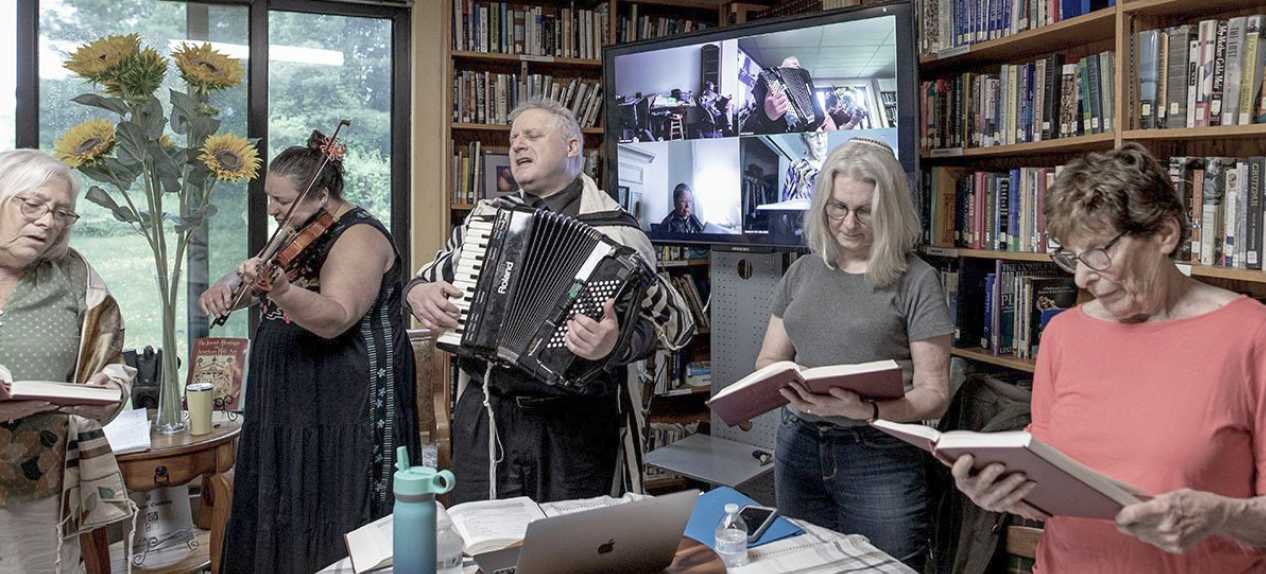
There is Always an &
Exhibit Developed by the Maine Jewish Museum on loan to the HHRC
Photographs by Hedva Rokach
There ls Always an & is part of MJM’s exhibition of the same name and its related Ampersand Project, an exploration of the diversity, complexity, and interconnectedness of Jewish life in Maine. Learn more.
We are profoundly grateful to the Maine Jewish Museum for their generous loan of the extraordinary painting from the extensive project they undertook with Photographer Hedva Rokach. We are so eager for our community to come experience these works, which will be on display for a year. There Is Always an &is the signature photography exhibition of the Ampersand Project, a first-of-its-kind documentation initiative exploring the layered identities of Jews across Maine. The ampersand reflects the expansive nature of Jewish life in Maine: personal and communal, rooted and restless, traditional and innovative, ancient and forward-looking. Each portrait invites viewers to embrace the fluid, unfinished, and surprising stories that shape us. In just six weeks, Israeli photographer Hedva Rokach traveled more than 7,000 miles, documenting Jewish life across the state. She met with nearly 300 Jewish Mainers creating an unprecedented portrait of community that spans coastal towns and inland villages, urban neighborhoods and rural backroads, established congregations and emerging micro-communities.
Melissa Martens Yaverbaum is a museum professional and cultural strategist whose work centers on American Jewish history and contemporary culture. She has led major exhibition initiatives across the U.S. and is recognized for innovative approaches to Jewish material culture, narrative interpretation, and community engagement. She is an arts leader in Maine, and serves as the Executive Director of Portland Ballet.
Acts of Resistance
Student Artwork Inspired by Jewish Resistance During WWII
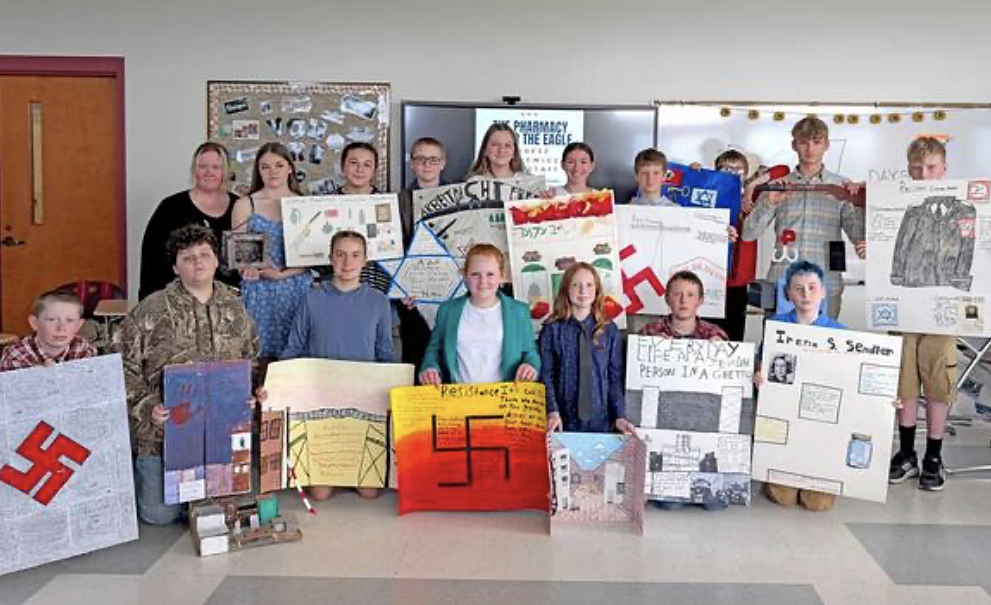
Under the guidance of educator Cara Merrill and Holocaust and Human Rights Center of Maine Education Coordinator Erica Nadelhaft, seventh grade students in Ashland, Maine have undertaken a thoughtful and deeply reflective exploration of Jewish resistance during the Holocaust. Through classroom visits, discussion, research, and artistic interpretation, students engaged not only with stories of armed uprisings, but with the many forms of resistance that emerged in ghettos, forests, camps, and hiding places throughout Nazi-occupied Europe.
Central to this project was an expanded understanding of resistance itself. Students learned about spiritual resistance: acts of dignity, identity, creativity, faith, mutual care, and self-preservation carried out in the face of dehumanization. They encountered histories that challenge narrow definitions of heroism and instead illuminate the many ways people resisted oppression, often quietly and at great personal risk.
The works presented here span a wide range of mediums, including dioramas, interactive installations, written reflections, poetry, and visual art using symbolism, color, and abstraction. Together, these pieces attempt to convey the texture of daily life during the Holocaust while responding to the emotional and moral questions the students encountered through their learning. Some works focus on escape and survival; others grapple with memory, fear, hope, or the preservation of identity under impossible conditions.
Throughout the exhibition, recurring symbols and themes emerge. Word clouds capture ideas of resilience and humanity. Historical references, such as the gate of Auschwitz, ground the work in historical reality while allowing room for personal interpretation. A quotation by Elie Wiesel on the necessity of protest in the face of injustice became a unifying thread, shaping both classroom dialogue and artistic expression.
What distinguishes this collection is the care and seriousness with which these students approached difficult history. Their work reflects not only an effort to understand the past, but also a willingness to ask what it means to bear witness in the present. Through art, reflection, and inquiry, these students demonstrate that learning history is not simply an act of remembrance, but an act of engagement, empathy, and responsibility.