
The Artifact Program
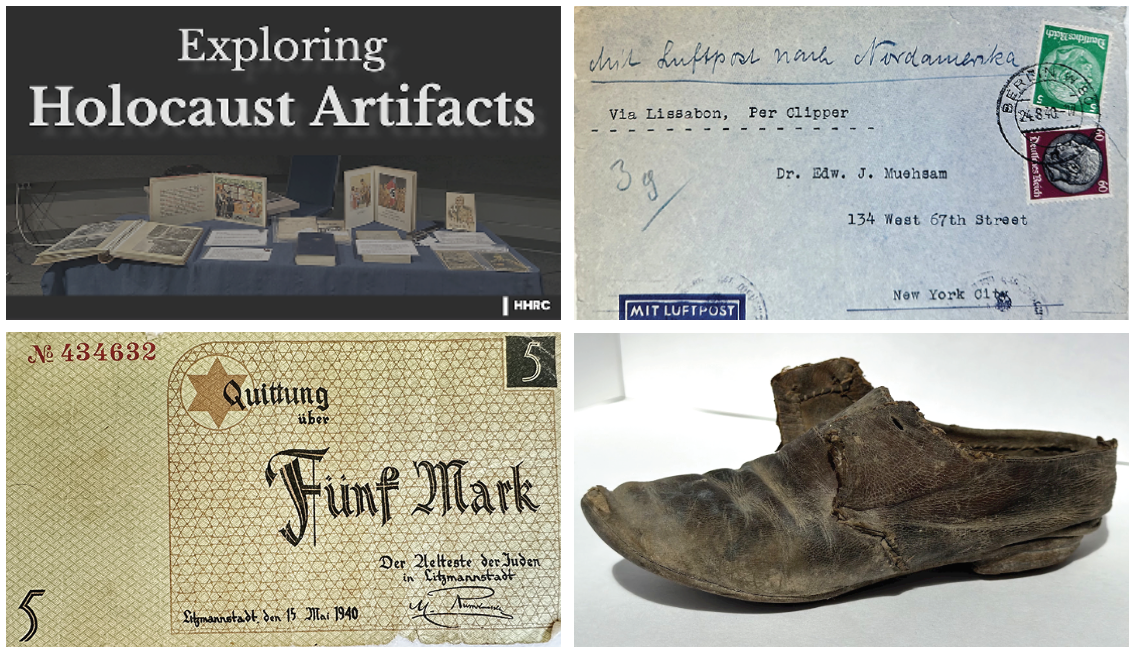
Images: correspondence from the Muesham family to a relative in New York in the 1930 as they tried to leave Nazi Germany, currency from the Lodz Ghetto, and a child’s shoe found at a death camp in Poland.
Receive a downloadable lesson plan for your students
Primary sources are original documents or artifacts that provide firsthand evidence or direct testimony about a particular topic, event, or period. These sources include letters, diaries, official records, photographs, tangible objects, newspaper articles, speeches, interviews, and archaeological findings.They offer direct insight into historical events, social conditions, cultural practices, and individual perspectives from when they were created. Like survivor testimony, artifacts are also a powerful educational tool. Within artifacts there are always stories for students to discover. Bringing artifacts into the classroom allows students to focus on real people and their stories, bringing history to life.
Our newly-developed Artifact Program provides students with the opportunity to engage with an artifact from the Holocaust. We will focus on three: correspondence from the Muesham family trying to leave Nazi Germany, currency from the Lodz Ghetto, and a child’s shoe found at a death camp in Poland. Each one will have a robust, downloadable lesson plan, complete with descriptions, a slideshow, suggested classroom activities, projects, conversation topics and writing prompt.
Our first one is ready. It is built around a child’s shoe that was found at one of the death camps in Poland and includes slides, classroom activities, discussion questions, and resources for further exploration. If you would like to access the document that offers suggestions for teaching, extensive historical information related to this object, lesson plans and discussion topics—as well as slides that pertain to each section. We hope you will take advantage of this in-depth, engaging resource.
Artifacts are also a powerful educational tool. Within artifacts there are always stories for students to discover. Bringing artifacts into the classroom allows students to focus on individuals and their stories and to relate to them, not only in their time of death but in their lives. These stories bring out both the individual and personal experience as well as the more general history contained in the artifact.
In addition, the use of artifacts encourages active learning as students work with documents, texts, and photos related to the artifact as they seek to uncover its story. This type of exploration helps students develop critical thinking, make connections to background knowledge, build content about a historical event or period, and gain a more critical and well-rounded understanding of history.
Please fill out the form below and we will email you links to the google docs