
More Than Memories
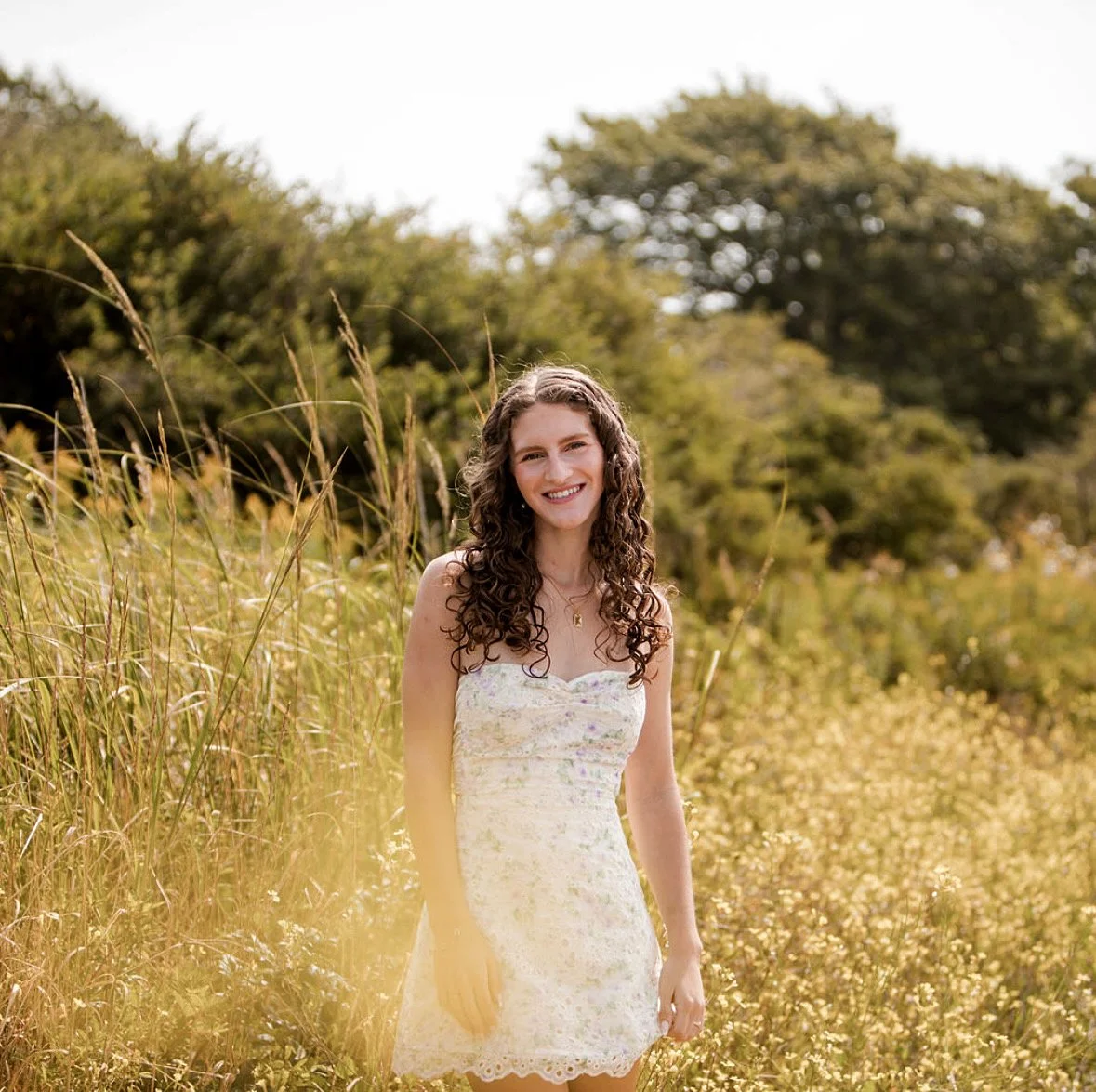
By Lauren Jordan
Lawrence Alan Spiegel Remembrance Scholarship Recipient
The Holocaust, or Shoah in Hebrew, is often taught through numbers: six million lives lost, millions more displaced, entire communities erased. However, numbers, no matter how large, cannot fully capture what was taken. For me, the Holocaust has never been distant or abstract. It has shaped how I understand not only history, but identity, memory, and the fragile line between belonging and being targeted.
I grew up connected to Judaism through my mother’s side of the family. While I was not deeply religious myself, my grandparents are, and their faith has always been a strong presence in my life. I celebrated Hanukkah, took part in traditions, and witnessed the way religion and identity were woven into everyday life. In my classrooms, I was often the only one who celebrated Hanukkah. I was aware that it made me different, but I was proud of it. Over time, I came to understand what my grandfather meant when he wrote, “We are as much a people as a religion. It is difficult if not impossible to determine where one factor ends and the other begins.” Being Jewish is not only about belief. It is about heritage, community, and a shared history that stretches across generations. I have seen the beauty of that community through my family. I have seen how traditions are preserved with care, how stories are passed down, and how memory is treated as something sacred. That makes the Holocaust even more difficult to comprehend. It was not only an act of violence. It was an attempt to erase something deeply human and meaningful. mmmmThat history is not separate from me. It lives within my family. My grandmother shared that her grandmother was able to obtain penicillin and send it through the Red Cross to a relative in a concentration camp. As a result of their name appearing on a Red Cross list, they were allowed to live, eventually building a life in Israel. His survival came down to a single act, a fragile thread that could have easily been broken. At the same time, another branch of my family was lost. My grandpa’s uncle lived near Odessa, and is believed to have been killed. There is no full story, no clear ending, only absence. That contrast, between survival and disappearance, has shaped my understanding of the Holocaust as something deeply personal. It is not just history, it is the reason some stories in my family exist, and others do not.
I also had the rare opportunity to meet someone who lived through it. Kurt Messerschmidt, a Holocaust survivor, a cantor, and a friend of my grandfather, was nearly one hundred years old when I spoke with him. He was a musician, something he and my grandfather had in common, and even performed some of my grandfather’s compositions. I remember his tired but kind eyes, a quiet reflection of a life that had seen more than most ever will. There was a gentleness in him that stood in contrast to the cruelty he had endured. He has since passed away, and that reality has changed the way I think about memory. Survivors like Kurt carried history not in books, but in their lives. Speaking with him made the Holocaust feel immediate, not distant. It made me realize how much of our understanding depends on those who are able to tell their stories, and how quickly that responsibility is being passed on.
The Star of David was always a symbol I associated with love, family, and belonging. It was something familiar and meaningful in my life. Learning about the Holocaust forced me to see that same symbol in a completely different way. It was turned into something used to label people as less than, as unworthy, as targets. I remember reading The Diary of Anne Frank for the first time and struggling to understand how a girl not much different from me, part of a community I had experienced as so full of life and connection, could be reduced to something so easily targeted and erased. That realization became even more personal as I came to understand a difficult truth: according to Jewish law, Jewish identity is passed through the mother. My mother is Jewish, so I am as well. In another time, under the ideology that fueled the Holocaust, I would not have been seen as separate from those who were targeted. The line between past and present becomes uncomfortably thin when I consider that reality. The history I have learned about is not just something that happened to others, it is something that could have included me.
I have come to realize that history is often taught as something far in the past, something separate from the present. However, the ideas that fueled events like the Holocaust are not as distant as they seem. They persist in quieter forms, in prejudice, in denial, and in acts of violence that still occur today. That realization has made learning about the Holocaust feel not only relevant, but necessary. It has also shaped how I see the world. It has made me more aware of how easily people can be reduced to labels, and how dangerous it is when those labels are used to divide or dehumanize. The Holocaust did not begin with violence, instead, it began with words, with exclusion, and with the slow normalization of hatred.
Today, there are still those who deny that the Holocaust ever happened, and there are still acts of antisemitism and violence directed toward Jewish communities. The fear of antisemitism is still in the air, and my family still lives through that fear every day. This makes remembrance not only an act of honoring the past, but a responsibility in the present. As my grandfather wrote, “If we do not share those events with our children and their children… many will forget it ever happened.” Memory is not automatic, instead, it must be preserved, protected, and passed on with intention.
Learning about the Holocaust has given me a sense of responsibility. Not only to remember, but to recognize the warning it carries. The Holocaust is not only Jewish history, it is human history, and it can repeat itself. It shows what can happen when prejudice is allowed to grow, when people remain silent, and when truth is ignored. It is important for others to learn about the Holocaust not only to understand the past, but to take responsibility for the future. The stories we carry, from our families and from people like Kurt, are not meant to remain still. They are meant to be shared, remembered, and used as a guide for how we treat others. Behind every number was a person, a life, and a future that should have continued. Remembering them is not only an act of respect, but a responsibility I carry as someone shaped by the very history that once sought to erase people like me.